
About Ethiopia
Ethiopia – 3000 Year Old Culture
Ethiopia is one of Africa’s oldest and most fascinating countries, with a recorded history stretching back thousands of years. Located in the Horn of Africa, Ethiopia is renowned for its ancient civilizations, unique cultural traditions, dramatic landscapes, historic churches, diverse communities, wildlife, and legendary coffee culture.
Unlike most African countries, Ethiopia maintained its independence throughout the colonial period, apart from the brief Italian occupation from 1936 to 1941. It is also home to some of Africa’s most remarkable historical and archaeological treasures, including Aksum, Lalibela, Gondar, the Lower Omo Valley, the Simien Mountains, and the Bale Mountains.
Ethiopia shares borders with Eritrea to the north, Djibouti and Somalia to the east, Kenya to the south, and Sudan and South Sudan to the west.
Historically, Ethiopia was often referred to internationally as Abyssinia, a name believed to have connections with the ancient term Habesha. Today, Ethiopia is the country’s official and universally recognized name.
History of Ethiopia
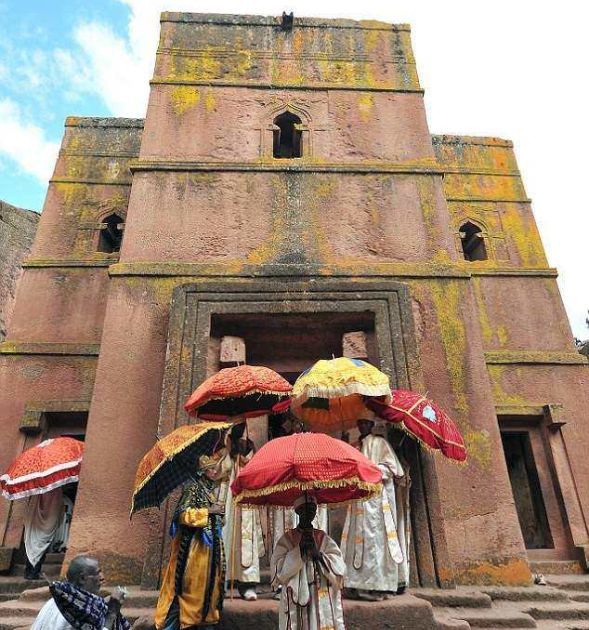
Ethiopia has one of the longest and richest histories in Africa.
The name Ethiopia originates from the Greek word Aithiopia, which ancient Greek writers used to describe lands south of Egypt. Over time, the name became associated more specifically with the region occupied by modern Ethiopia.
One of Ethiopia’s earliest great civilizations was the Kingdom of Aksum, which emerged as a major commercial and political power in the first centuries AD. At its height, Aksum controlled important trade routes connecting Africa, Arabia, and the Mediterranean world.
During the reign of King Ezana in the fourth century AD, Christianity was adopted by the Aksumite kingdom, making Ethiopia one of the world’s earliest Christian nations.
Ethiopian history is also deeply associated with the famous story of the Queen of Sheba and King Solomon. According to Ethiopian tradition recorded in the Kebra Nagast — the Glory of Kings — the Ethiopian royal dynasty descended from their son, Menelik I.
The Solomonic Dynasty, which came to power in the 13th century, claimed descent from this biblical lineage and ruled Ethiopia, with interruptions, for several centuries.
This long historical continuity can still be experienced today through Ethiopia’s archaeological sites, ancient monasteries, rock-hewn churches, royal castles, manuscripts, religious ceremonies, and living traditions.
Geography

Ethiopia is a land of extraordinary geographical contrasts.
Although the country lies relatively close to the Equator, much of Ethiopia enjoys a surprisingly moderate climate because of its high elevation. Large areas of the country lie more than 1,500 metres above sea level, while some mountain peaks rise above 4,000 metres.
The Ethiopian Highlands dominate much of the landscape and are divided by the Great Rift Valley, an immense geological formation that extends through eastern Africa.
In northern Ethiopia lie some of the country’s most spectacular mountains, including the Simien Mountains, where Ras Dejen, Ethiopia’s highest mountain, rises to approximately 4,550 metres above sea level.
The southeastern highlands include the Bale Mountains, famous for their Afro-alpine landscapes and rare wildlife.
Beyond the highlands, Ethiopia contains dramatic lowland environments including the Danakil Depression, one of the hottest and lowest places on Earth, as well as the dry landscapes of Afar, the Omo Valley, and the Somali Region.
The country also contains numerous rivers, lakes, waterfalls, escarpments, forests, and volcanic landscapes.
The Blue Nile, one of the major tributaries of the Nile River, begins at Lake Tana in northwestern Ethiopia.
Climate
 Ethiopia’s climate varies considerably according to altitude and location.
Traditionally, the country’s climate is divided into three broad altitude zones:
Dega – Cool highland areas, generally above approximately 2,500 metres.
Woyna Dega – Temperate middle-altitude areas with pleasant conditions and moderate temperatures.
Kolla – Hotter lowland areas, including many parts of eastern, southern, and western Ethiopia.
In much of the central and northern highlands, the main rainy season, known as Kiremt, generally occurs between June and September.
A shorter rainy season known as Belg often occurs between approximately February and May in parts of the country.
Southern Ethiopia has somewhat different rainfall patterns because of influences from the Indian Ocean and regional climatic systems.
For travelers, Ethiopia can therefore be visited throughout much of the year, although the best period depends on the region and the activities planned.
Language
Ethiopia is one of the most linguistically diverse countries in Africa, with more than 80 languages spoken across the country.
Amharic is the working language of Ethiopia’s Federal Government and is widely spoken throughout the country.
Other major Ethiopian languages include:
- Afaan Oromo
- Tigrinya
- Somali
- Afar
- Sidama
- Gurage languages
- Wolaytta
- Hadiyya
Many Ethiopian languages belong to the Afroasiatic language family, particularly its Semitic, Cushitic, and Omotic branches. Several Nilo-Saharan languages are also spoken, particularly in western Ethiopia.
English is widely taught in schools and universities and is commonly used in tourism, international business, government institutions, and higher education.
Visitors traveling with experienced guides will also have the opportunity to encounter numerous local languages and dialects while exploring different regions of the country.
People and Cultural Diversity
Ethiopia is one of Africa’s most culturally diverse nations.
The country has a population of well over 100 million people and is home to more than 80 ethnic and linguistic communities, each contributing its own customs, traditions, clothing, music, cuisine, ceremonies, and social practices.
Among Ethiopia’s many communities are the Oromo, Amhara, Somali, Tigrayan, Sidama, Gurage, Afar, Wolayta, Hamar, Mursi, Konso, Dassanech, Karo, and many others.
This diversity is particularly visible during traditional markets, religious celebrations, village ceremonies, weddings, festivals, and cultural gatherings.
Hospitality occupies an important place in Ethiopian society. Visitors are often welcomed with coffee, food, conversation, and invitations to participate in local traditions.
The word Habesha is commonly used in certain contexts to describe Ethiopians and Eritreans associated historically with the northern highlands, although Ethiopia’s population is much broader and more diverse.
Foreign visitors may also hear the informal term Ferenji, traditionally used to refer to foreigners.
Religion and Spiritual Heritage
Religion has played an important role in Ethiopian culture for centuries.
Ethiopia is home to large Christian and Muslim communities as well as smaller traditional and other religious communities.
The Ethiopian Orthodox Tewahedo Church has a history extending back to the fourth century and has preserved distinctive religious traditions, architecture, manuscripts, music, fasting customs, and ceremonies.
Some of Ethiopia’s greatest attractions are connected with this religious heritage, including:
- The rock-hewn churches of Lalibela
- The churches and monasteries of Tigray
- Debre Damo Monastery
- The monasteries of Lake Tana
- The Church of St. Mary of Zion in Aksum
- Ancient churches and monasteries throughout the northern highlands
Islam also has a long history in Ethiopia. According to Islamic tradition, some of the earliest followers of the Prophet Muhammad found refuge in the Kingdom of Aksum.
The historic city of Harar, with its mosques, shrines, traditional houses, and narrow alleyways, remains one of the most important centers of Islamic culture in the Horn of Africa.
Agriculture and Economy
Agriculture remains one of the most important sectors of Ethiopia’s economy and supports millions of households.
The country’s varied climate and elevation allow farmers to produce an extraordinary range of crops.
Major agricultural products include:
- Coffee
- Teff
- Wheat
- Barley
- Maize
- Sorghum
- Pulses
- Oilseeds
- Vegetables
- Fruits
- Flowers
Livestock farming is also extremely important, particularly in pastoral regions such as Afar, Somali, and parts of southern Ethiopia.
Ethiopia has one of the largest livestock populations in Africa, including cattle, sheep, goats, camels, and other animals.
Coffee remains Ethiopia’s most internationally famous agricultural product and an important source of export income.
Population
 Ethiopia is considered to be a mosaic of cultural diversity. ‘The population of Ethiopia is estimated to be about 110 million. It is the home of more than 80 ethnic groups. Based on the language they speak, they can be divided into Semitic, Hamitic, Nilotic and Omotic origin. Despite their diversity, Ethiopians are characterized as peaceful and hospitable, and united in their struggle to develop the country. Ethiopians, often called ‘Habesha,’ have a common name for their visitors “Ferenji” which is not meant in disrespect, but in a friendly and sociable manner. Ethiopians are proud of their culture and civilization, which pre-date those of Europe.
Ethiopian Food
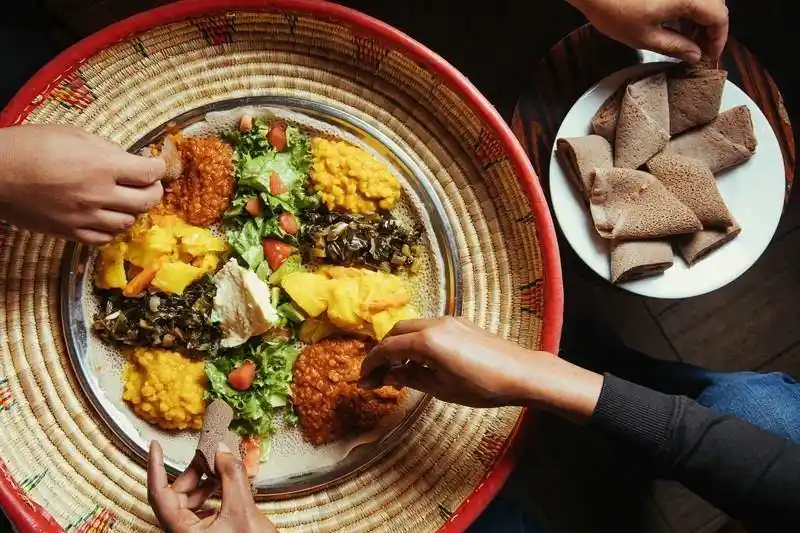 Ethiopian cuisine is one of the country’s great cultural experiences.
Most traditional meals are served on injera, a large, slightly sour flatbread traditionally made from teff. Different sauces, vegetables, meat dishes, and lentils are placed on the injera and shared by everyone around the table.
Popular Ethiopian dishes include:
Doro Wot
A rich and spicy chicken stew prepared with onions, berbere spice, butter, and boiled eggs. It is often served during important celebrations and holidays.
Tibs
Pieces of beef, lamb, or goat sautéed or grilled with onions, peppers, herbs, and spices.
Kitfo
Finely minced beef traditionally mixed with spices and clarified butter known as niter kibbeh. It may be served raw, lightly cooked, or fully cooked.
Shiro
A thick and flavorful stew usually made from powdered chickpeas or broad beans. It is one of Ethiopia’s most popular everyday dishes.
Misir Wot
A spicy red lentil stew flavored with berbere.
Alicha
A milder stew usually prepared without the strong berbere spice used in many Ethiopian dishes.
Vegetarian and vegan travelers will find Ethiopia particularly interesting because Ethiopian Orthodox fasting traditions have produced a large variety of vegetable, lentil, and pulse-based dishes.
Traditional Ethiopian Drinks
Ethiopia also has several traditional beverages.
Tej is a traditional Ethiopian honey wine, often flavored with a plant known as gesho.
Tella is a traditional fermented beer made using grains such as barley, wheat, maize, or teff.
Areki is a strong traditional distilled alcoholic drink produced from fermented grains.
Modern Ethiopian breweries and wineries also produce a growing range of beers and wines.
Ethiopia – The Birthplace of Coffee
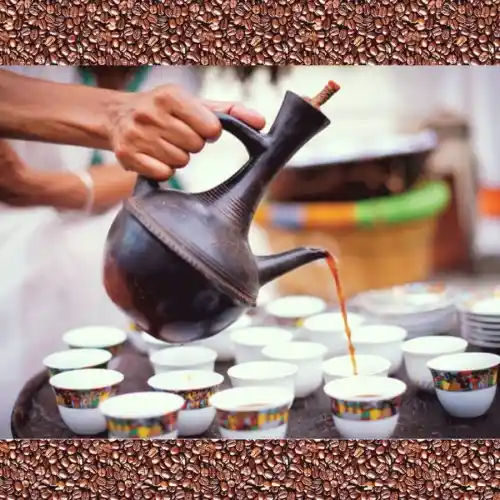 Ethiopia is widely recognized as the birthplace of Arabica coffee.
According to popular tradition, coffee was discovered centuries ago in the region of Kaffa, where a goat herder named Kaldi noticed that his animals became unusually energetic after eating the berries of a particular plant.
Whether the legend is historically accurate or not, wild coffee plants have grown naturally in Ethiopia for centuries, and coffee remains deeply connected with Ethiopian life and culture.
Different Ethiopian regions produce coffees with distinctive flavors and aromas. Famous coffee-growing areas include:
- Yirgacheffe
- Sidama
- Guji
- Jimma
- Limu
- Harrar
- Kaffa
Ethiopian coffees are internationally respected for their floral, fruity, citrus, chocolate, and wine-like flavor profiles.
The Ethiopian Coffee Ceremony
Coffee in Ethiopia is much more than a beverage.
The traditional Ethiopian coffee ceremony is a social and cultural ritual performed in homes, restaurants, villages, and communities throughout the country.
Traditionally, green coffee beans are washed and roasted over a small fire while guests enjoy the aroma. The roasted beans are then ground and brewed in a traditional clay coffee pot called a jebena.
Coffee is usually served in small cups, often accompanied by popcorn, roasted grains, or traditional snacks.
Three rounds of coffee may traditionally be served:
Abol – the first and strongest cup.
Tona – the second round.
Bereka – the third round, whose name is associated with blessing.
A complete coffee ceremony can last for an hour or more and provides an opportunity for family members, neighbors, and visitors to sit together, talk, and strengthen social relationships.
For travelers, participating in an Ethiopian coffee ceremony is one of the most authentic cultural experiences the country offers.
Festivals and Celebrations
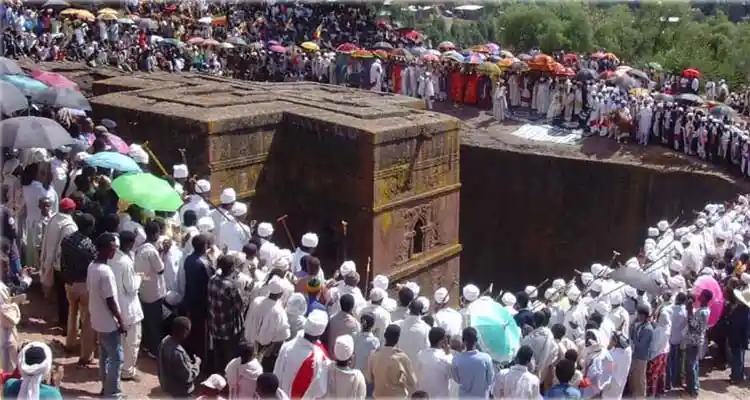 Ethiopia has a rich calendar of religious and cultural festivals.
Some of the most famous include:
Timkat – Ethiopian Epiphany
Celebrated every January, Timkat commemorates the baptism of Jesus Christ. Colorful processions, religious ceremonies, chanting, dancing, and the ceremonial carrying of sacred replicas of the Ark of the Covenant make it one of Ethiopia’s most impressive festivals.
Meskel – Finding of the True Cross
Celebrated in September, Meskel is marked by large ceremonial bonfires known as Demera. The celebration is particularly spectacular in Addis Ababa and many towns throughout the Ethiopian highlands.
Ethiopian Christmas – Genna
Ethiopian Orthodox Christmas is celebrated on 7 January and is especially memorable in Lalibela, where thousands of pilgrims gather around the ancient rock-hewn churches.
Ethiopian Easter – Fasika
Fasika follows a long fasting period and is one of the most important celebrations in the Ethiopian Orthodox calendar.
Enkutatash – Ethiopian New Year
The Ethiopian New Year is celebrated in September at the end of the main rainy season, when the countryside becomes green and yellow Adey Abeba flowers appear across the highlands.