Simien Mountains Travel & Trekking Guide
Planning a trip to the Simien Mountains requires more preparation than an ordinary sightseeing tour. Elevation, changing weather, trekking duration and route choice can significantly affect your experience.
This guide covers the main things to know before visiting Simien Mountains National Park.
Where Are the Simien Mountains?
The Simien Mountains are located in northern Ethiopia, with Debark serving as an important gateway to the national park.
Many visitors approach the region through Gondar before travelling towards Debark and the trekking areas.
What Makes the Simien Mountains Special?
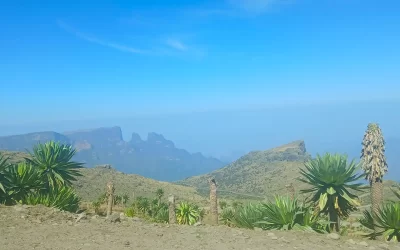
The landscape has been shaped by millions of years of erosion into towering cliffs, deep valleys, high plateaus and distinctive mountain formations.
UNESCO describes the area as having jagged mountain peaks, deep valleys and sharp precipices, with significant populations of threatened wildlife.
Main Places to See
Sankaber: Sankaber is one of the best-known starting areas for Simien Mountains treks. The surrounding landscape provides an excellent introduction to the park, with escarpment scenery and opportunities to encounter geladas.
Jinbar Waterfall: The Jinbar River drops dramatically from the high plateau into the gorge below. It is particularly impressive around and after the rainy period when water volume is higher.
Geech: The Geech area is surrounded by highland scenery and serves as a base on several classic trekking routes.
Imet Gogo: Imet Gogo is one of the most famous viewpoints in the Simien Mountains. Its elevated position provides extraordinary views across cliffs, valleys and distant peaks and makes it one of the highlights of multi-day trekking itineraries.
Chenek: Chenek is another scenic area of the park and an important location for trekkers progressing deeper into the mountains. It is also associated with opportunities to look for Walia ibex.
Ras Dejen: Ras Dejen — also commonly written Ras Dashen — is Ethiopia’s highest mountain and the objective of the park’s longer trekking expeditions.
How Many Days Do You Need?
There is no single ideal duration.
1–2 days: suitable for visitors with limited time who want landscapes and wildlife.
3–4 days: a good introduction to trekking in the park.
5–7 days: allows a more immersive trek with additional viewpoints and camping areas.
8–10+ days: suitable for deeper expeditions and itineraries that include Ras Dejen.
Ras Dejen Ethiopia Trekking currently offers Simien itineraries ranging from shorter trips through longer expeditions.
Difficulty
Difficulty depends heavily on the itinerary.
A short trek along sections of the main escarpment can be manageable for reasonably active travellers.
Longer itineraries become considerably more demanding because of:
- altitude
- repeated ascents and descents
- long walking days
- rough trails
- basic camping conditions
- colder temperatures at elevation
A Ras Dejen expedition should therefore not be treated as equivalent to a short Simien sightseeing trek.
Altitude
Much of the trekking takes place at significant elevation, with several areas around or above 3,000 metres.
Travellers should allow their bodies time to adjust, walk at a sustainable pace, drink enough water and tell their guide if they experience symptoms associated with altitude.
Best Time for Simien Mountains Trekking
Trekking is possible during much of the year, but conditions vary substantially by season.
The period following the main rains can produce particularly green landscapes, while the drier months generally provide more predictable trail conditions. Ethiopia’s tourism authority notes that highland scenery is especially attractive after the rains, from late September into December.
The best period for an individual traveller will depend on whether the priority is greener scenery, drier trails, wildlife, photography or particular festivals elsewhere in Ethiopia.
What Should You Pack?
Useful items include:
- broken-in hiking shoes or boots
- layered clothing
- warm jacket or fleece
- rain protection
- sun hat
- sunscreen
- reusable water bottle
- small daypack
- headlamp
- personal medication
- trekking poles if normally used
- camera or binoculars
Nighttime temperatures at higher elevations can feel significantly colder than visitors expect from an African destination, so warm clothing is important.
Camping in the Simien Mountains
Longer trekking routes usually involve nights in mountain camps.
Facilities can be basic, and travellers should approach the trek as an outdoor adventure rather than a luxury lodge holiday.
The reward is the chance to wake in some of Ethiopia’s most spectacular mountain landscapes.
Wildlife
Important species in and around the park include:
Gelada: frequently encountered in highland grasslands.
Walia ibex: an endemic mountain goat associated particularly with the steep cliffs of the Simien Mountains.
Ethiopian wolf: much rarer but one of Ethiopia’s most important endemic mammals.
The Simien ecosystem is internationally significant partly because of the presence of these species.
Combining the Simien Mountains with Other Destinations
A Simien Mountains trip can easily become part of a larger northern Ethiopia itinerary incorporating:
Gondar → Simien Mountains → Aksum → Tigray → Lalibela
Alternatively, travellers with more time can combine northern Ethiopia with the Bale Mountains, Omo Valley or other destinations.
Plan Your Simien Mountains Trek
Ras Dejen Ethiopia Trekking specializes in journeys through the Simien Mountains, from shorter walking tours to longer trekking routes and Ras Dejen summit expeditions.
Contact us with your travel dates, available days and preferred trekking level and we can suggest an appropriate itinerary.