
22 Days Suri Hiking, Omo National Park & Omo Valley Expedition
Tour Overview
Experience one of Ethiopia’s most adventurous cultural journeys on this 22-day Suri hiking and Omo Valley expedition, travelling from the coffee-growing regions of southwestern Ethiopia into remote Suri country, Omo National Park and the culturally diverse Lower Omo Valley.
Beginning in Addis Ababa, travel through Jimma, Mizan Teferi and the coffee-growing southwest before continuing towards Tulgit and Kibish, the heartland of the Suri people, also commonly referred to as Surma.
Spend several days hiking and travelling through remote western Omo landscapes, visiting Suri communities and exploring the region around Maji before continuing through Omo National Park.
The second half of the journey connects the western Omo with the better-known Lower Omo cultural route, including Nyangatom, Karo, Hamar, Dassanech, Mursi, Konso, Arba Minch and Lake Chamo.
This is not a conventional sightseeing holiday. It is an expedition-style journey involving remote roads, camping, hiking, cultural encounters and long travel days in areas visited by relatively few travellers.
Tour Highlights
- Explore Ethiopia’s southwestern coffee country
- Visit coffee-growing areas around Bebeka
- Travel deep into remote Suri / Surma territory
- Spend several days around Kibish and Tulgit
- Hike between villages and rural landscapes
- Experience Suri cattle culture and traditional body decoration
- Learn about Donga ceremonial stick fighting when locally taking place
- Explore Maji and remote western Omo landscapes
- Travel through Omo National Park
- Experience wilderness camping
- Visit Nyangatom communities
- Explore Karo villages overlooking the Omo River
- Spend time with Hamar communities around Turmi
- Travel to Omorate and visit Dassanech communities
- Visit a Mursi community
- Discover UNESCO-listed Konso Cultural Landscape
- Explore Arba Minch and Lake Chamo
- Travel through Rift Valley landscapes
- Combine hiking, culture, photography, wildlife and adventure travel
At a Glance
Duration: 22 Days / 21 Nights
Start/Finish: Addis Ababa
Tour Type: Cultural expedition, hiking, camping, wildlife and photography
Transportation: Private expedition 4×4 vehicles
Accommodation: Hotels, lodges and remote camping
Difficulty: Moderate to challenging
Best For: Experienced travellers, photographers and cultural-adventure travellers
Detailed Itinerary
Day 1 – Arrival in Addis Ababa
Arrive at Addis Ababa Bole International Airport and meet your representative.
Transfer to your hotel.
Depending on arrival time, explore selected attractions such as the National Museum, Holy Trinity Cathedral, Entoto or other areas of Ethiopia’s capital.
Overnight: Addis Ababa
Day 2 – Addis Ababa → Jimma
Leave Addis Ababa and travel southwest towards Jimma, one of Ethiopia’s major coffee-region cities.
The road passes through changing highland landscapes, agricultural communities and river valleys.
Arrive in Jimma and explore selected cultural or historical attractions depending on available time.
Overnight: Jimma
Day 3 – Jimma → Mizan Teferi → Bebeka Coffee Region
Continue deeper into southwestern Ethiopia.
Travel through increasingly lush landscapes towards Mizan Teferi and the Bebeka coffee-growing region.
Visit a coffee plantation or coffee-growing community where arrangements permit and learn about cultivation, harvesting and the importance of coffee to the regional economy.
Overnight: Guesthouse, hotel or locally available accommodation
Day 4 – Bebeka / Mizan → Tulgit
Leave the coffee-growing region and begin travelling towards the remote western Omo region.
The road becomes increasingly rugged as you approach Tulgit, an important settlement in Suri country.
Meet local guides and begin learning about Suri customs and appropriate etiquette for community visits.
Overnight: Camping in Tulgit area
Day 5 – Tulgit → Suri Villages → Kibish
Spend the morning visiting Suri communities around Tulgit before travelling towards Kibish.
The Suri are pastoralist communities for whom cattle play an important economic and social role.
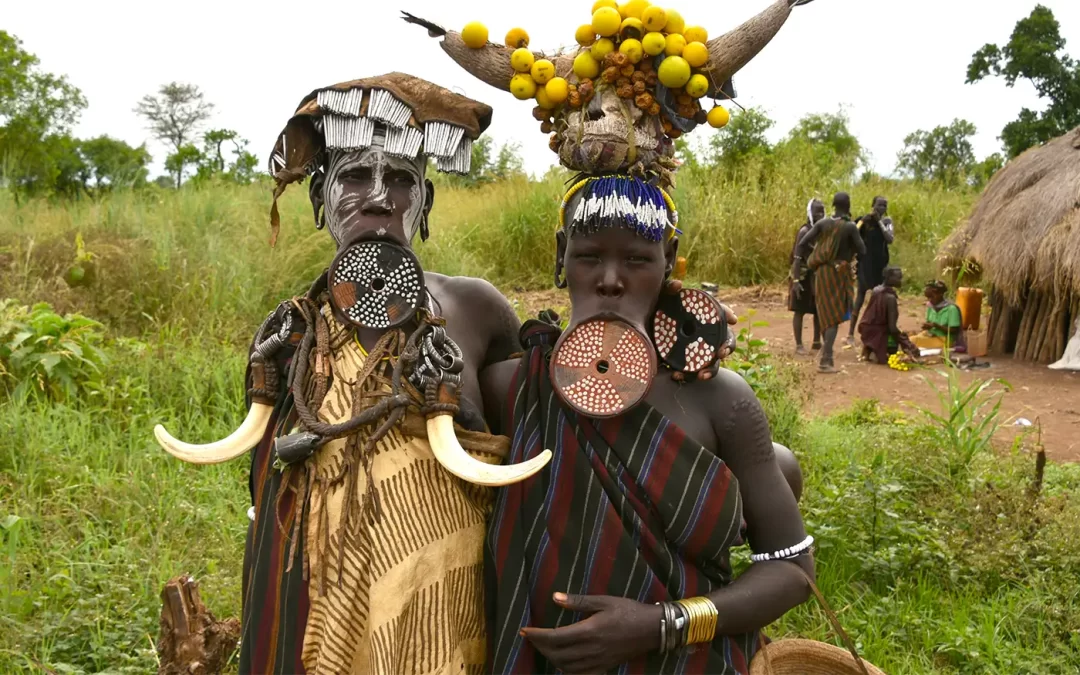
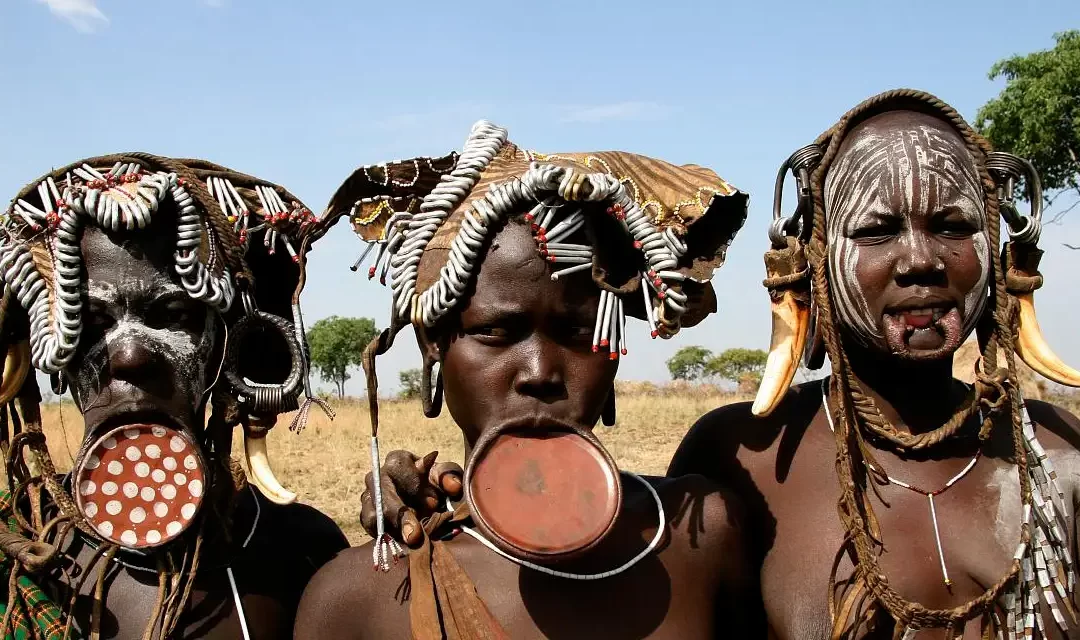
Traditional body decoration, scarification and lip plates worn by some women are among the cultural features for which Suri communities are widely known.
Photography should always be arranged respectfully through your guide.
Continue towards Kibish.
Overnight: Camping near Kibish
Day 6 – Full-Day Suri Cultural Experience & Hiking
Spend a full day around Kibish.
Rather than simply making brief photography stops, use the day for walking between settlements and gaining a better understanding of everyday life.
Depending on local circumstances, activities may include:
- village walks
- cattle camps
- traditional body painting
- farming and livestock activities
- local markets where scheduled
- riverside landscapes
If a Donga stick-fighting ceremony is naturally taking place and visitors are permitted to attend, your guide may arrange a visit.
Such ceremonies are community events and cannot be guaranteed.
Overnight: Kibish
Day 7 – Kibish → Maji Region
Travel or hike through remote western Omo landscapes towards the Maji region.
The terrain here is considerably less visited than the standard Lower Omo tourist circuit.
Depending on current routing and road conditions, sections may combine vehicle travel with walking.
Enjoy forests, valleys, small settlements and changing elevations.
Overnight: Camping or locally available accommodation
Day 8 – Maji Cultural & Hiking Day
Spend the day exploring the Maji area with local guides.
Depending on route and access, visit nearby communities, waterfalls, viewpoints or local markets.
This section of the itinerary can also provide opportunities to learn about communities such as the Dizi and other peoples of southwestern Ethiopia.
Overnight: Camping in Maji region
Day 9 – Maji → Omo National Park
Leave the Maji area and continue towards Omo National Park.
The journey takes you into one of Ethiopia’s most remote protected landscapes.
Omo National Park contains extensive savannah, woodland and river environments and requires suitable 4×4 transportation and experienced local guides.
Set up camp and, time permitting, enjoy an introductory wildlife excursion.
Overnight: Omo National Park camping
Day 10 – Omo National Park Exploration
Spend the day exploring selected areas of Omo National Park.
Wildlife is less predictable and often more difficult to observe here than in heavily visited East African safari reserves, but possible sightings may include buffalo, antelope species, elephants and numerous birds.
The attraction of Omo National Park also lies in its remoteness and wilderness atmosphere.
Overnight: Camping in Omo National Park
Day 11 – Omo National Park → Nyangatom Region
Continue east or southeast through the wider Omo landscape towards Nyangatom territory according to the currently accessible route.
Visit a Nyangatom community with local guides.
Learn about pastoral life, livestock, traditional adornment and community organization.
Overnight: Camping or lodge according to route
Day 12 – Nyangatom → Karo → Turmi
Travel towards the Omo River and visit a Karo community.
Karo settlements occupy striking positions above the river and are known for decorative body painting.
Spend time learning about village life before continuing towards Turmi, the main centre of Hamar country.
Overnight: Turmi
Day 13 – Hamar Cultural Experience
Spend the day exploring communities around Turmi.
Learn about Hamar homes, cattle culture, hairstyles, adornment and rural livelihoods.
Where tour dates coincide with a local market, the itinerary can be adjusted to include it.
If a traditional bull-jumping ceremony takes place during your visit and attendance is permitted, your guide may be able to arrange a visit.
It should never be advertised as guaranteed because ceremonies are organized according to community circumstances rather than tourist schedules.
Overnight: Turmi
Day 14 – Turmi → Omorate → Dassanech → Turmi
Drive south towards Omorate, close to the Kenyan border.
Cross the Omo River using locally available transport and visit a Dassanech community.
Learn about life in the hot and dry lower Omo region and the role of livestock and the river.
Return to Turmi.
Overnight: Turmi
Day 15 – Turmi → Jinka
Leave Turmi and travel towards Jinka.
Depending on the market calendar and road route, stop at one of the regional markets or communities along the way.
Arrive in Jinka and relax after several days in the lower Omo.
Overnight: Jinka
Day 16 – Jinka → Mago National Park → Mursi Community
Depart early for Mago National Park.
Continue towards a Mursi community accompanied by appropriate local guides.
Learn about Mursi culture, cattle traditions and changing life in the region.
Photography should always be negotiated respectfully.
Return to Jinka.
Overnight: Jinka
Day 17 – Jinka → Konso
Leave Jinka and travel north towards Konso.
The landscape gradually changes from the hot Omo lowlands to the higher agricultural landscapes of Konso.
Arrive and settle into your hotel.
Overnight: Konso
Day 18 – Konso Cultural Landscape → Arba Minch
Explore the Konso Cultural Landscape, recognized by UNESCO for its extraordinary terraced agricultural landscape and fortified settlements.
Visit a traditional settlement with a local guide and learn about stone terracing, community structure and farming traditions.
Continue to Arba Minch.
Overnight: Arba Minch
Day 19 – Dorze Highlands & Lake Chamo
Drive into the highlands above Arba Minch to visit a Dorze community.
Learn about weaving, traditional houses, agriculture and local food.
Return to Arba Minch and take a boat trip on Lake Chamo.
Look for Nile crocodiles, hippos and waterbirds.
Overnight: Arba Minch
Day 20 – Arba Minch → Rift Valley / Lake Langano Area
Leave Arba Minch and begin travelling north through southern Ethiopia and the Rift Valley.
Continue towards the Lake Langano region or another suitable overnight location according to the confirmed routing.
Enjoy the change from southern highlands to Rift Valley landscapes.
Overnight: Rift Valley area
Day 21 – Rift Valley → Addis Ababa
Continue to Addis Ababa.
Make appropriate scenic or cultural stops along the route.
Arrive in the capital in the afternoon or evening.
Overnight: Addis Ababa
Day 22 – Addis Ababa & Departure
Depending on your international flight, enjoy additional sightseeing, shopping or a farewell meal.
Transfer to Bole International Airport.
Tour ends.
Tour Includes
- Private expedition 4×4 transportation
- Professional English-speaking guide
- Experienced drivers
- Suri and Omo Valley local guides
- Park scouts where required
- Accommodation stated in the confirmed package
- Camping tents and camping equipment
- Camping support team where required
- Meals during specified remote camping sections
- Entrance fees to included national parks
- Community entrance fees stated in the itinerary
- Lake Chamo boat excursion
- Omo River crossing where included
- Airport transfers
- Drinking water during road and camping sections
- Government taxes and service charges
Tour Excludes
- International airfare
- Ethiopian visa
- Travel insurance
- Domestic flights unless specifically included
- Meals not specified in the package
- Alcoholic and soft drinks
- Photography fees charged individually where applicable
- Optional ceremony fees
- Personal hiking equipment
- Tips and gratuities
- Laundry
- Telephone and internet
- Personal purchases
- Medical treatment
- Emergency evacuation expenses
- Services not specifically included
Additional Information
Tour Difficulty
Moderate to challenging.
The difficulty comes from remote travel rather than high-altitude trekking.
Expect:
- rough roads
- long driving days
- hiking between rural communities
- hot temperatures
- basic camps
- limited infrastructure
- remote locations
Hiking
The Suri section combines vehicle travel with walking and hiking around Tulgit, Kibish and other western Omo areas.
It should be marketed as cultural hiking and expedition travel, not as a continuous 22-day trekking route.
Best Time
Remote roads in Omo National Park and western Omo are generally more manageable during drier periods. The South Ethiopia Tourism Bureau particularly recommends the dry period for Omo National Park because access can be difficult during rains.
Suri or Surma?
Both names are widely used in tourism literature.
For SEO, use both naturally:
- Suri people
- Surma people
- Suri / Surma hiking
- Surma trekking Ethiopia
Avoid making “Surma” the only term used across the page.
Cultural Photography
Always ask permission before photographing people.
Your local guide will help explain photography customs and any locally applicable charges.
Responsible Cultural Travel
Community visits should emphasize meaningful interaction rather than simply photographing physical appearance or traditional practices.
Respect:
- personal boundaries
- sacred or culturally sensitive activities
- children
- local photography rules
- private homes
- ceremonies
Wildlife
Omo National Park supports diverse wildlife, but sightings are unpredictable and should never be guaranteed.
The park’s official regional tourism information recommends 4WD travel, local guides and careful preparation because of its remoteness.
Route Flexibility
This is essential for this tour.
Roads between Maji, Kibish, Omo National Park and Lower Omo may vary significantly according to season and local conditions.
The final route should be reconfirmed before departure.
Why Choose This 22-Day Expedition?
This tour is very different from our standard 5-, 8- or 14-day Omo Valley packages.
It combines:
Southwestern Ethiopia → Coffee Country → Suri / Surma → Omo National Park → Nyangatom → Karo → Hamar → Dassanech → Mursi → Konso → Arba Minch
It is therefore one of our most complete southern Ethiopia cultural and adventure tours.
Request a Quote for this Tour
5 Days Omo Valley Tour – Mursi, Hamar, Karo & Dassanech Tribes
Discover the cultural diversity of southern Ethiopia on this 5-day Omo Valley tour, designed for travellers with limited time who still want to experience some of the region’s best-known communities and landscapes.

5 Days Harar, Babile Elephant Sanctuary & Awash National Park Tour
Combine Awash National Park wildlife with UNESCO-listed Harar, colourful markets, Harari culture and the Babile region on this five-day tour.

8 Days Southern Ethiopia Tour | Arba Minch, Konso, Mursi & Hamar
Experience the landscapes, wildlife and cultural diversity of southern Ethiopia on this 8-day Omo Valley and Southern Ethiopia tour.
14 Days Southern Ethiopia & Omo Valley Cultural Tour
Explore southern Ethiopia for two weeks through Hawassa, Arba Minch, Konso, Turmi, Jinka and the diverse communities of the Omo Valley.